
Pavement & Driveway Services in Tarrant County, TX
Local Asphalt Contractor Expertise
From Arlington to North Richland Hills, an asphalt contractor in Tarrant County, TX serves commercial and residential properties across the Dallas-Fort Worth metropolitan area. This page covers the core services—sealcoating, paving, repairs—and what property owners in your area should know about pavement maintenance, permit rules, and when to call.
Tarrant County's fast-growing residential and commercial districts depend on durable asphalt surfaces. Whether you manage a retail center lot in Grapevine, an HOA community in Benbrook, or an apartment complex near Irving, understanding your pavement lifecycle saves money and prevents safety issues down the road.
How We Work
A clear process builds trust. Here's what happens from estimate to completion.
Project Steps & Phases
1Site Assessment
Inspect surface condition, drainage, base integrity, and local permit requirements. Photo documentation helps confirm scope and set expectations.
2Written Estimate & Plan
Outline work sequence, material specs, and HOA approval steps if needed. Clear estimates prevent surprises.
3Prep & Cleanup
Remove debris, sweep, and protect adjacent areas. Proper surface prep is critical for sealcoat or overlay adhesion.
4Application & Finishing
Apply sealcoat, paving, or repairs per plan. Expert crews ensure even coverage and professional appearance.
5Final Inspection & Sign-Off
Walk the site with you. Document completion, answer questions, and confirm satisfaction.
You'll always know what's happening next—and when.
Our Services
Four core services cover most property needs across Tarrant County.
Asphalt Sealcoating
Sealcoating protects asphalt from UV damage, water penetration, and chemical spills. Applied every 2–3 years, it extends pavement life and restores the dark appearance of new asphalt. Retail centers, apartment complexes, and HOAs in Mansfield and Kennedale rely on regular sealing to prevent expensive repairs.
- Blocks UV rays that dry and crack pavement
- Prevents oil and chemical damage
- Restores surface color and appearance
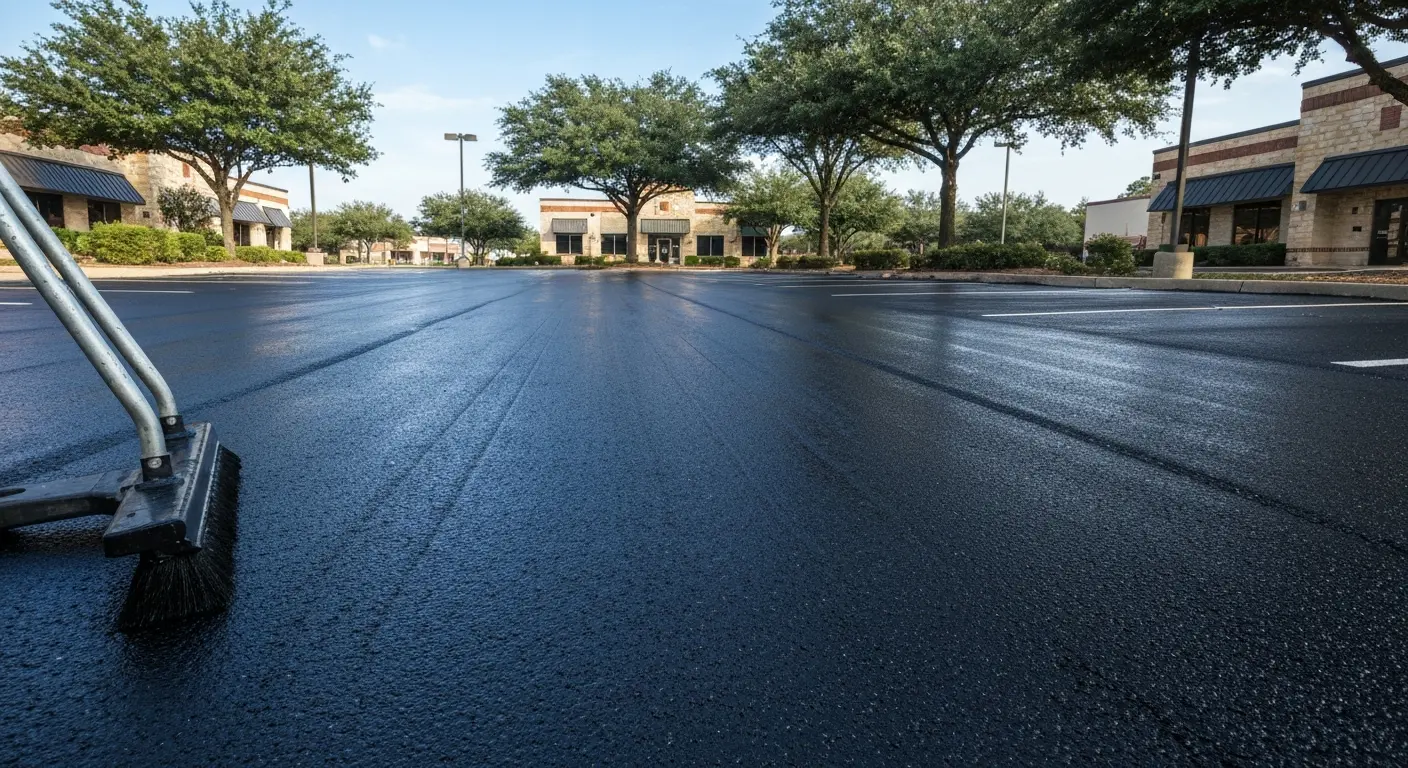
Fresh sealcoat applied to commercial lot in Grapevine, TX
Asphalt Paving & Installation
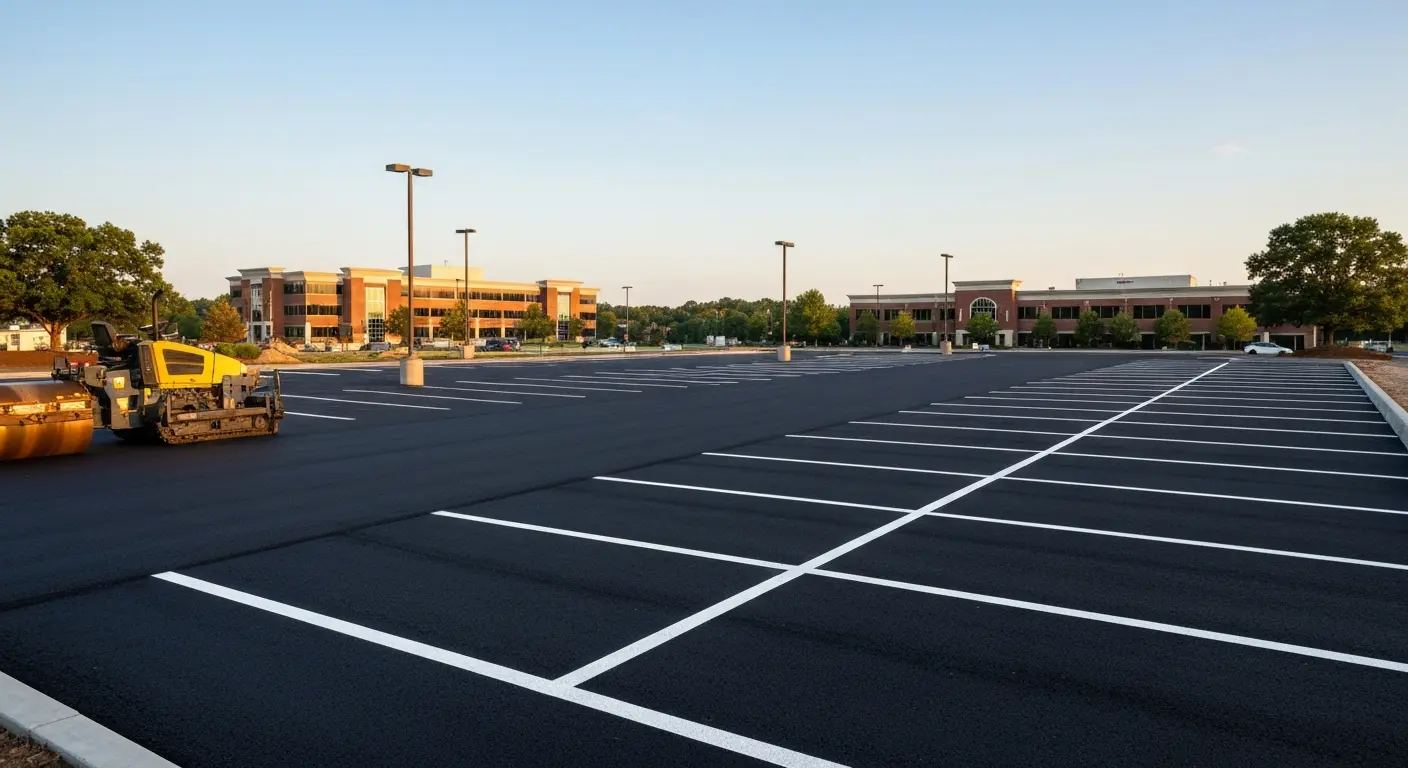
Complete parking lot installation near Arlington, meeting commercial grade standards
New pavement requires proper base preparation, grading, and compaction to handle traffic weight and weather stress. Commercial lots near Irving and Fort Worth need layers built to support heavy vehicles and comply with ADA and drainage codes.
- Base stabilization and proper drainage design
- Compacted layers for durability
- Meets HOA, municipal, and ADA standards
Asphalt Repair & Patching
Potholes, cracks, and edge damage reduce safety and attract liability claims. Benbrook residential communities and commercial office parks benefit from quick repair to maintain appearance and prevent water damage beneath the surface.
- Pothole patching and crack sealing
- Edge repair and perimeter restoration
- Emergency repairs to prevent safety hazards
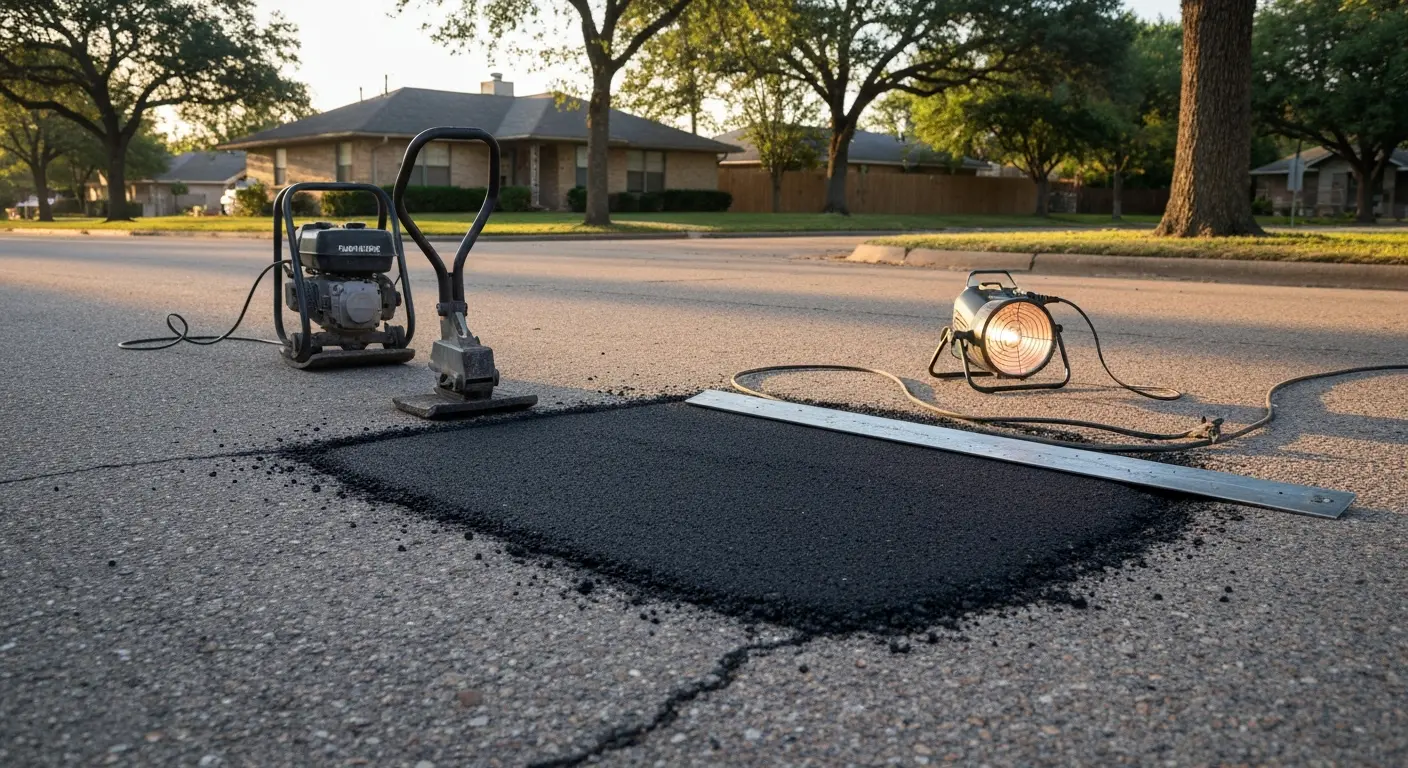
Pothole patch in Hurst neighborhood, sealed and compacted for durability
Asphalt Resurfacing & Overlays
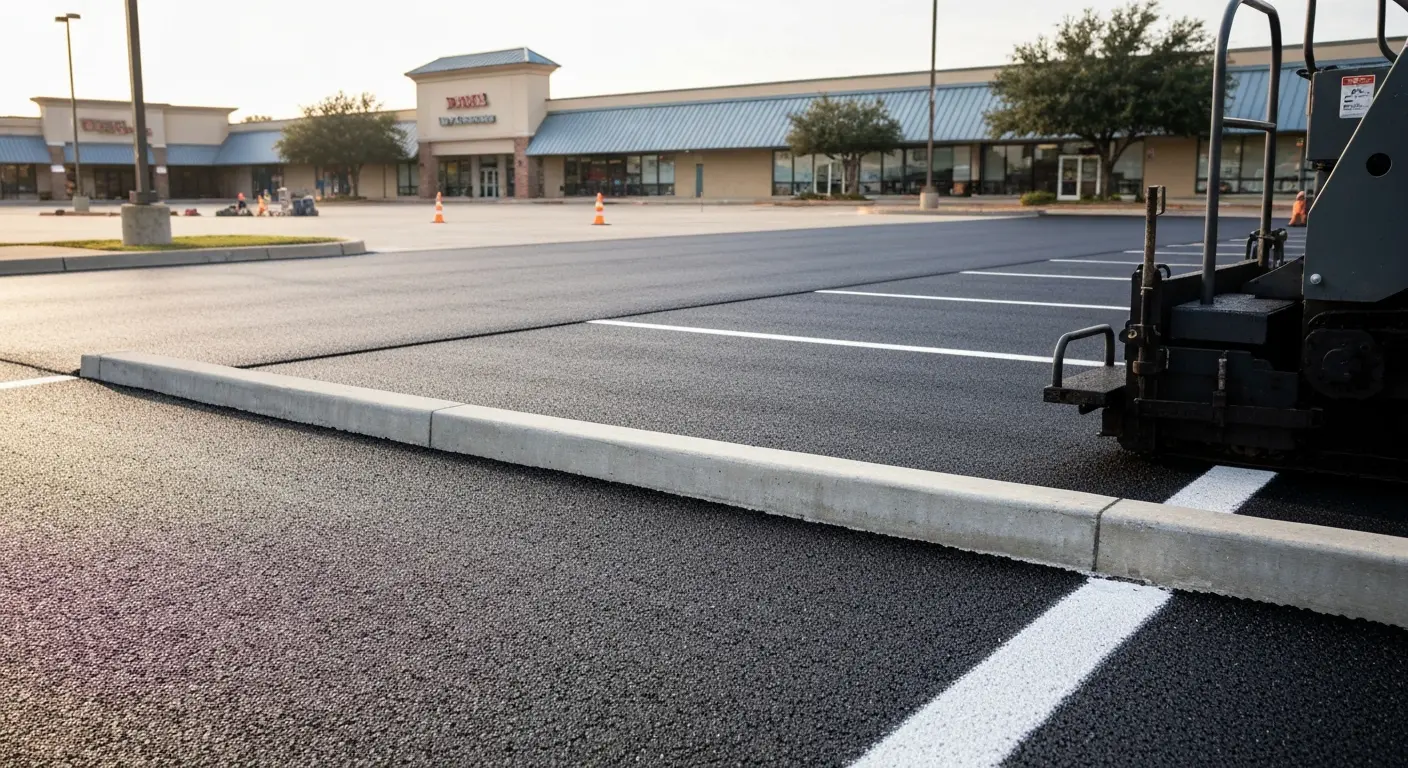
Overlay rejuvenates aging pavement, North Richland Hills shopping complex
When a surface is worn but the base is sound, overlays restore appearance and extend life at lower cost than full replacement. Typical for lots 10–15 years old, resurfacing is common in HOA communities across Tarrant County seeking budget-friendly solutions.
- Thin overlays on stable foundations
- More economical than full replacement
- Restores smooth ride and professional appearance
Why Local Expertise Matters
Tarrant County's climate, traffic patterns, and regulatory environment shape how pavement is maintained.
Texas Heat & Weather Stress
DFW summers exceed 95°F regularly, expanding asphalt and baking the surface. Winter freeze-thaw cycles and heavy rain accelerate cracking. Regular sealcoating and proactive crack repair prevent small problems from becoming expensive base repairs. Contractors familiar with this climate understand the timing and materials needed.
HOA Covenants & Approval Process
Many Tarrant County HOAs require board approval before paving work begins. Contractors who understand local CC&Rs and community reserve timelines can expedite planning and reduce delays. Parking lots and private streets in Benbrook, Westworth Village, and other gated communities often have strict appearance standards.
Local Insight: Tarrant County subdivision regulations require surface preparation and drainage compliance for all new pavement. Contractors familiar with county code save owners from costly rework.
Commercial Growth & Access
Tarrant County is one of Texas's fastest-growing regions. Commercial corridors in Arlington, Irving, and Grapevine experience heavy traffic. High-traffic parking lots demand thicker, reinforced asphalt and strategic resurfacing schedules to avoid downtime and maintain curb appeal for retail customers.
Coverage Areas Across Tarrant County
We serve residential and commercial properties throughout Tarrant County and the DFW metro.
Central Tarrant
Arlington, Grand Prairie, Mansfield. High-density residential, retail centers, and sports facilities. Frequent foot and vehicle traffic demands frequent maintenance.
Northeast Tarrant
North Richland Hills, Hurst, Euless, Keller. Mixed residential and commercial near North East Mall and the DFW Airport corridor. Traffic from daily commutes and logistics.
Southwest Tarrant
Benbrook, Crowley, Kennedale. Family-oriented communities near Benbrook Lake. Smaller parking lots and HOA private streets with seasonal recreational traffic.
North Fort Worth
Watauga, White Settlement. Residential neighborhoods with established character. Lower-density streets and driveways requiring consistent upkeep.
Northeast Suburbs
Grapevine, Colleyville, Southlake. Affluent, newer subdivisions with upscale retail. High aesthetic standards and well-maintained street infrastructure.
Irving & Industrial
Irving, Las Colinas. Logistics, corporate parks, and highway corridors. Heavy axle loads and strict maintenance timelines for operational reliability.
Getting Here & Initial Consultation
Most properties in Tarrant County are accessible from major thoroughfares: Interstate 20, I-30, I-35E, Highway 360, and state routes 121, 183, and 26. Call or message for a site visit, estimate, and project timeline. For HOA properties, we'll help coordinate with your board and confirm any approval requirements.
Whether your property is in a gated community, commercial district, or residential area, we arrive with assessment forms, photo documentation, and a clear quote process. No surprise costs, no hidden fees.
Frequently Asked Questions
How often should a parking lot be sealcoated?
Most commercial lots and HOA parking areas benefit from sealcoating every 2–3 years. High-traffic areas (retail centers, apartment complexes) may need every 2 years. Check with your property manager or reserve study to confirm your community's plan.
Do Tarrant County HOAs require board approval for paving work?
Most do. Check your CC&Rs and community policies. Many Tarrant County HOAs require written approval before sealcoating or repairs to common areas. Budget committees also appreciate advance notice to coordinate with reserve funding schedules.
What's the difference between sealcoating and overlay?
Sealcoating is a thin protective layer applied every few years to prevent UV and water damage. Overlay is a new asphalt layer applied when the surface is worn but the base is solid. Overlays last longer and handle more wear but cost more than sealcoating.
Can we schedule work when our lot is closed (evenings, weekends)?
Yes. We coordinate project timing with property managers and HOA boards. Many retail centers, office parks, and apartment communities schedule work after hours or during slow seasons to minimize tenant disruption.
What permits do I need for asphalt work in Tarrant County?
Most sealcoating does not require permits. New paving, overlays, and site work may need approval from your municipality or HOA. We're familiar with Tarrant County code requirements and can advise if permits are needed before work begins.
How does heat affect paving in the DFW area?
Summer heat expands asphalt and can open cracks. Winter freeze-thaw cycles then allow water to infiltrate the base. Regular sealcoating and prompt crack repair are critical in Tarrant County to prevent water damage and extend pavement life.
Local Asphalt Contractor Expertise
From Arlington to North Richland Hills, an asphalt contractor in Tarrant County, TX serves commercial and residential properties across the Dallas-Fort Worth metropolitan area. This page covers the core services—sealcoating, paving, repairs—and what property owners in your area should know about pavement maintenance, permit rules, and when to call.
Tarrant County's fast-growing residential and commercial districts depend on durable asphalt surfaces. Whether you manage a retail center lot in Grapevine, an HOA community in Benbrook, or an apartment complex near Irving, understanding your pavement lifecycle saves money and prevents safety issues down the road.
How We Work
A clear process builds trust. Here's what happens from estimate to completion.
Project Steps & Phases
Site Assessment
Inspect surface condition, drainage, base integrity, and local permit requirements. Photo documentation helps confirm scope and set expectations.
Written Estimate & Plan
Outline work sequence, material specs, and HOA approval steps if needed. Clear estimates prevent surprises.
Prep & Cleanup
Remove debris, sweep, and protect adjacent areas. Proper surface prep is critical for sealcoat or overlay adhesion.
Application & Finishing
Apply sealcoat, paving, or repairs per plan. Expert crews ensure even coverage and professional appearance.
Final Inspection & Sign-Off
Walk the site with you. Document completion, answer questions, and confirm satisfaction.
You'll always know what's happening next—and when.
Our Services
Four core services cover most property needs across Tarrant County.
Asphalt Sealcoating
Sealcoating protects asphalt from UV damage, water penetration, and chemical spills. Applied every 2–3 years, it extends pavement life and restores the dark appearance of new asphalt. Retail centers, apartment complexes, and HOAs in Mansfield and Kennedale rely on regular sealing to prevent expensive repairs.
- Blocks UV rays that dry and crack pavement
- Prevents oil and chemical damage
- Restores surface color and appearance
Fresh sealcoat applied to commercial lot in Grapevine, TX
Asphalt Paving & Installation
Complete parking lot installation near Arlington, meeting commercial grade standards
New pavement requires proper base preparation, grading, and compaction to handle traffic weight and weather stress. Commercial lots near Irving and Fort Worth need layers built to support heavy vehicles and comply with ADA and drainage codes.
- Base stabilization and proper drainage design
- Compacted layers for durability
- Meets HOA, municipal, and ADA standards
Asphalt Repair & Patching
Potholes, cracks, and edge damage reduce safety and attract liability claims. Benbrook residential communities and commercial office parks benefit from quick repair to maintain appearance and prevent water damage beneath the surface.
- Pothole patching and crack sealing
- Edge repair and perimeter restoration
- Emergency repairs to prevent safety hazards
Pothole patch in Hurst neighborhood, sealed and compacted for durability
Asphalt Resurfacing & Overlays
Overlay rejuvenates aging pavement, North Richland Hills shopping complex
When a surface is worn but the base is sound, overlays restore appearance and extend life at lower cost than full replacement. Typical for lots 10–15 years old, resurfacing is common in HOA communities across Tarrant County seeking budget-friendly solutions.
- Thin overlays on stable foundations
- More economical than full replacement
- Restores smooth ride and professional appearance
Why Local Expertise Matters
Tarrant County's climate, traffic patterns, and regulatory environment shape how pavement is maintained.
Texas Heat & Weather Stress
DFW summers exceed 95°F regularly, expanding asphalt and baking the surface. Winter freeze-thaw cycles and heavy rain accelerate cracking. Regular sealcoating and proactive crack repair prevent small problems from becoming expensive base repairs. Contractors familiar with this climate understand the timing and materials needed.
HOA Covenants & Approval Process
Many Tarrant County HOAs require board approval before paving work begins. Contractors who understand local CC&Rs and community reserve timelines can expedite planning and reduce delays. Parking lots and private streets in Benbrook, Westworth Village, and other gated communities often have strict appearance standards.
Local Insight: Tarrant County subdivision regulations require surface preparation and drainage compliance for all new pavement. Contractors familiar with county code save owners from costly rework.
Commercial Growth & Access
Tarrant County is one of Texas's fastest-growing regions. Commercial corridors in Arlington, Irving, and Grapevine experience heavy traffic. High-traffic parking lots demand thicker, reinforced asphalt and strategic resurfacing schedules to avoid downtime and maintain curb appeal for retail customers.
Coverage Areas Across Tarrant County
We serve residential and commercial properties throughout Tarrant County and the DFW metro.
Central Tarrant
Arlington, Grand Prairie, Mansfield. High-density residential, retail centers, and sports facilities. Frequent foot and vehicle traffic demands frequent maintenance.
Northeast Tarrant
North Richland Hills, Hurst, Euless, Keller. Mixed residential and commercial near North East Mall and the DFW Airport corridor. Traffic from daily commutes and logistics.
Southwest Tarrant
Benbrook, Crowley, Kennedale. Family-oriented communities near Benbrook Lake. Smaller parking lots and HOA private streets with seasonal recreational traffic.
North Fort Worth
Watauga, White Settlement. Residential neighborhoods with established character. Lower-density streets and driveways requiring consistent upkeep.
Northeast Suburbs
Grapevine, Colleyville, Southlake. Affluent, newer subdivisions with upscale retail. High aesthetic standards and well-maintained street infrastructure.
Irving & Industrial
Irving, Las Colinas. Logistics, corporate parks, and highway corridors. Heavy axle loads and strict maintenance timelines for operational reliability.
Getting Here & Initial Consultation
Most properties in Tarrant County are accessible from major thoroughfares: Interstate 20, I-30, I-35E, Highway 360, and state routes 121, 183, and 26. Call or message for a site visit, estimate, and project timeline. For HOA properties, we'll help coordinate with your board and confirm any approval requirements.
Whether your property is in a gated community, commercial district, or residential area, we arrive with assessment forms, photo documentation, and a clear quote process. No surprise costs, no hidden fees.
Frequently Asked Questions
How often should a parking lot be sealcoated?
Most commercial lots and HOA parking areas benefit from sealcoating every 2–3 years. High-traffic areas (retail centers, apartment complexes) may need every 2 years. Check with your property manager or reserve study to confirm your community's plan.
Do Tarrant County HOAs require board approval for paving work?
Most do. Check your CC&Rs and community policies. Many Tarrant County HOAs require written approval before sealcoating or repairs to common areas. Budget committees also appreciate advance notice to coordinate with reserve funding schedules.
What's the difference between sealcoating and overlay?
Sealcoating is a thin protective layer applied every few years to prevent UV and water damage. Overlay is a new asphalt layer applied when the surface is worn but the base is solid. Overlays last longer and handle more wear but cost more than sealcoating.
Can we schedule work when our lot is closed (evenings, weekends)?
Yes. We coordinate project timing with property managers and HOA boards. Many retail centers, office parks, and apartment communities schedule work after hours or during slow seasons to minimize tenant disruption.
What permits do I need for asphalt work in Tarrant County?
Most sealcoating does not require permits. New paving, overlays, and site work may need approval from your municipality or HOA. We're familiar with Tarrant County code requirements and can advise if permits are needed before work begins.
How does heat affect paving in the DFW area?
Summer heat expands asphalt and can open cracks. Winter freeze-thaw cycles then allow water to infiltrate the base. Regular sealcoating and prompt crack repair are critical in Tarrant County to prevent water damage and extend pavement life.
DISCOVER WHAT OUR CUSTOMERS HAVE TO SAY ABOUT US
REVIEWS
proudly serving these areas
Collin County, TX
Dallas County, TX
Delta County, TX
Denton County, TX
Ellis County, TX
Hopkins County, TX
Hunt County, TX
Johnson County, TX
READY TO take the next step?
get a free quote TODAY!
QUICK LINKS
our services
service areas
operating HOURS
Mon: 8:00 am - 5:00 pm
Tue: 8:00 am - 5:00 pm
Wed: 8:00 am - 5:00 pm
Thu: 8:00 am - 5:00 pm
Fri: 8:00 am - 5:00 pm
Sat: Closed - Closed
Sun: Closed - Closed